Will anyone actually die?

I just came across another fabulous quote from Peter Drucker.

“There is nothing so useless as doing efficiently that which should not be done at all.”

Sometimes instead of asking how we can do something better, maybe we should be asking ourselves what would happen if we didn’t do it at all.

We should be asking ourselves questions such as:

  • Is it critical to what we do?
  • Does it move us towards our mission?
  • Would our customers notice if we didn’t do it?
  • Who would die if we didn’t do it? (figuratively of course)

An awesome tool

The Ministry of Business Innovation & Employment has released a draft document on the future of business for New Zealand – and this is now open for consultation.

One of the trends being examined is purpose led business – something that should be of interest to all of us. Have a read here and I encourage you to provide feedback (especially if you disagree with anything written).

The forward states:

Purpose-led business is an umbrella term for businesses that strive to achieve wider outcomes than just profit. This trend is not new, but its popularity has increased with the pervasiveness of issues like digitalisation, globalisation, climate change, and questions about equity. MBIE considers this operating mode can be a useful tool for businesses looking to be part of all-of-society approaches to critical issues.

Sounds good but let’s change the words “can be a useful tool” to “is definitely an awesome tool” and this is a great starting point.

Come on – get involved…

Imagine

“Imagine a world where every person matters.

A world full of caring work environments in which people can realize their gifts, apply and develop their talents, and feel a genuine sense of fulfilment for their contributions.

Everyone should have the opportunity to use their gifts and talents toward a shared vision and everyone deserve to work for a company that truly cares about them.”

Bob Chapman

Sorry but I won’t work with you

We all talk about values in our organisation, but how often do we use them to turn work away?

I was writing up a business plan for a start-up and following conventional advice, I was defining who the target audience was. I was nailing down a good description when it hit me. For an authentically purposeful business, it’s just as important to have a clear description of who we wouldn’t engage with.

I’m not talking about a waffley statement that remains hidden in the business plan to make us feel good. I’m not talking about a rule that is set in concrete – unless the offer is really enticing.

It should be a statement or description that is:

Up-front, clear and public so all prospective clients can see it.

Based on real values so it’s non-negotiable.

A commitment made to your customers that you value them for what they are doing, not just the dollars they pay you.

Lastly it is a statement of faith in yourself. A clear line in the sand that you know you will not cross – and why not crossing it is important to you.

I won’t go into the points I listed but for me, the over-riding premise was summed up by “I will not sell my soul by enabling anyone to damage our communities”

Surely one advantage of being in business is the ability to work with others who share your passions and values – and not just any jerk with money.

What a brilliant idea!

I came across this social enterprise and thought it was an absolutely brilliant concept.

Recycling not only needs to use (often) large amounts of energy, it is also becoming increasingly problematic as supply out strips demand for the finished products. It’s great we all put plastics out for recycling but if they end up sitting in huge stock piles, or worse the land fill, it’s really just virtue signaling on our part.

Reusing material is a much more sustainable concept and here we have a collective that’s doing there bit to educate us all on how we can jump onboard.

Check it out… The Recreators

Maybe we need a physicist to solve our social issues…

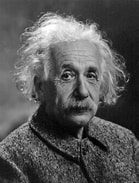
“If you have one hour to save the world, how would you spend that hour?” He replied, “I would spend 55 minutes defining the problem and then five minutes solving it.”

This quote has been attributed to Einstein and, assuming it was him who said it, he makes a very valid point – one we should be applying to social issues just as much as it’s applied to science.

Community organisations are great at meeting immediate needs such as providing food parcels. They then try to alleviate the issue longer term with education and support. We know education levels, employment, housing etc are contributing factors but do we really know why these issues continue?

Mental health issues seem to be increasing. Our health system provides drugs and intensive support while community groups are out there supporting at the coal face. Are these issues really increasing (as opposed to being more known) and if so why?

The answers that get trotted out are often ‘easy’, trendy and not really fully to the root cause. Again an Einstein quote is apt “What is right is not always popular and what is popular is not always right”.

We seem to be a species of problem reactors not problem analysts. Perhaps the answers really lie in science…

Why “The Optimistic Cynic” ?

Optimistic by nature, cynical by experience.

People often ask me why I use the name “The Optimistic Cynic”. The simple answer is ‘the name picked me’ but here is what it really means for me:

  • I’m a passionate believer that people basically want to do good. It’s not always easy but with the right support, values and information I know we can do more.
  • I know we can overcome just about every obstacle life throws in our way. Together we can be resilient, adaptable and creative.
  • There’s beauty all around us, sometimes we just need to be reminded where to look.
  • Life isn’t a fairy tale though. We need to be strong, question what’s around us and be pragmatic. As the man said, there is no such thing as a free lunch.
  • ‘Yes, but…’ is a legitimate tool to test our thinking, we need our devil advocates.
  • The optimist needs a cynic, and the cynic needs an optimist. Ying and yang working together.

I latched onto this name from my experiences with the disability sector and it grew from there. We have so much potential to provide everyone with a great life but when systems control us, innovation dies out. People believe in equality but don’t always treat people equally. Disability has taught me that we can always do better.